
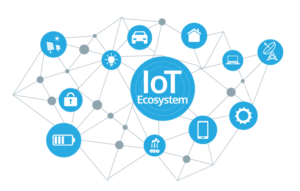
As we enter spring project planning season, a fundamental evolution is reshaping the Internet of Things. Traditional IoT architectures—where devices simply collect and transmit data to a central cloud for analysis—are reaching their limits in scalability, responsiveness, and intelligence. The next paradigm is emerging: IoT ecosystems powered by Agentic AI. This convergence transforms passive networks of sensors and actuators into intelligent, collaborative systems where embedded AI agents perceive, decide, and act autonomously at the edge, creating self-optimizing environments that adapt in real time.
This evolution is not just about adding AI to individual devices, but about orchestrating communities of specialized agents that govern physical systems. These agents, powered by open-source frameworks and increasingly efficient hardware, enable ecosystems that can predict maintenance needs, balance energy consumption, optimize logistics, and enhance safety without constant human intervention. For innovators planning next-generation IoT projects, mastering this agentic layer is the key to unlocking true autonomy and value.
The Architectural Evolution: From Cloud-Centric to Agent-Centric IoT
The shift represents a fundamental rethinking of where intelligence resides in the IoT stack.
- Traditional IoT (Cloud-Centric): Devices (sensors, cameras) act as “dumb” data terminals. Raw data streams continuously to a centralized cloud platform. Analytics and decision logic happen remotely, creating latency, bandwidth costs, and a single point of failure. The system reacts to what has already happened.
- Agentic IoT (Distributed Intelligence): Intelligence is embedded at multiple levels. Lightweight agents on edge devices (microcontrollers, gateways) perform immediate, local sensing and actuation. More capable “orchestrator” agents on local servers or regional nodes coordinate device clusters, interpreting broader patterns and executing multi-step workflows. The cloud becomes a repository for long-term learning and global oversight, not the primary brain. The system proactively manages what is happening and anticipates what will happen next.
This agentic framework enables a cognitive hierarchy, mirroring effective organizational structures: field agents handle tactical execution, manager agents optimize team performance, and strategic agents align everything with high-level objectives like efficiency, sustainability, or safety.
The Open-Source Stack for Building Agentic IoT
Implementing this vision is made practical by a mature open-source ecosystem.
- Agent Frameworks & Runtimes: Lightweight, modular frameworks are essential.
- CrewAI, LangGraph: Ideal for orchestrating complex, multi-step reasoning and task delegation between agents at the gateway or server level.
- MicroPython & Rust-based Agents: For deploying ultra-lean decision logic directly on constrained microcontrollers (MCUs), enabling basic autonomous functions.
- Eclipse ioFog: An open-source platform for deploying and managing distributed “microservices” (which can be AI agents) across edge networks.
- Communication & Orchestration: Agents must communicate securely and efficiently.
- MQTT & Sparkplug: The standard lightweight messaging protocol for IoT, perfect for agent-to-agent communication of events and commands.
- Eclipse Ditto: Manages digital twins—virtual, real-time representations of physical devices. Agents interact with these twins to understand system state, enabling decoupled and resilient control logic.
- Edge AI Model Deployment: Agents need on-device intelligence.
- TensorFlow Lite Micro & ONNX Runtime: Enable the deployment of small, quantized models (like SLMs or TinyML models) for perception and prediction directly on edge hardware.
- Model Registries (MLflow): Manage versions of AI models that are pushed to agents across the fleet, ensuring consistency and enabling seamless updates.
Blueprint for a Self-Optimizing Ecosystem: Key Design Patterns
The power of Agentic IoT emerges from specific patterns of collaboration between devices and software agents.
- Predictive Maintenance as a Collaborative Service: Instead of a vibration sensor streaming raw data, its onboard Diagnostic Agent analyzes patterns locally, detects an anomaly signature, and publishes an alert. A Fleet Manager Agent on the site server receives alerts from multiple machines, correlates them with maintenance logs and parts inventory, and dispatches a work order to a Logistics Agent, which schedules a technician and ensures parts are available—all before a human operator is aware of an issue.
- Dynamic Energy Grid in a Smart Building: In a building, each HVAC unit has a Climate Agent optimizing for local comfort and efficiency. A Room Orchestrator Agent aggregates data from units, occupancy sensors, and weather forecasts. It negotiates with a Building Manager Agent to dynamically adjust setpoints and blinds to shave peak energy loads, responding to real-time pricing signals from the grid without compromising comfort.
- Autonomous Material Handling in a Warehouse: Autonomous guided vehicles (AGVs) are no longer remotely piloted. Each AGV has a Navigation Agent for local obstacle avoidance. A Mission Agent on a local server assigns high-level pickup/drop-off tasks. A Traffic Control Agent optimizes the overall flow of all AGVs in real-time to prevent congestion, dynamically rerouting based on changing priorities and bottlenecks.
Spring Project Planning: A Phased Implementation Roadmap
For teams planning a 2024 implementation, a structured, phased approach de-risks the transition to Agentic IoT.
Phase 1: Foundation & Pilot (Months 1-4)
- Select a Contained, High-Value Use Case: Focus on a single system or process (e.g., HVAC control on one floor, monitoring for one critical production line) where optimization goals are clear.
- Implement Digital Twins: Use Ditto or a similar framework to create a real-time digital representation of your pilot system’s assets. This is your “single source of truth” for all agents.
- Deploy Your First Edge Agent: Start with one intelligent function—e.g., an anomaly detection agent on a key sensor. Use TinyML to keep it lightweight. Have it publish its insights via MQTT to a simple dashboard.
Phase 2: Orchestration & Scale (Months 5-8)
- Introduce the Orchestrator Agent: Develop a manager agent that consumes events from your first edge agents. Its job is to make a simple multi-device decision (e.g., “if Pump A is anomalous and Pressure Sensor B is high, then initiate shutdown protocol”).
- Establish the Agent Communication Layer: Formalize the MQTT topics and data schemas (using Sparkplug) that all agents will use to communicate. This is critical for interoperability.
- Expand the Agent Fleet: Replicate your edge agent pattern to other devices in the pilot system, creating a collaborative cell.
Phase 3: Autonomy & Learning (Months 9-12)
- Integrate Planning & Learning: Enhance your orchestrator agent with planning capabilities using a framework like CrewAI. Allow it to evaluate multiple action sequences in response to complex events.
- Implement a Feedback Loop: Introduce a Learning Agent that analyzes historical outcomes of agent decisions. Use this data to fine-tune the policies and models used by your edge and orchestrator agents, moving from rule-based to learning-based optimization.
- Plan for Fleet-Wide Rollout: Document your agent patterns, communication protocols, and deployment tools. This becomes your blueprint for scaling the architecture to the rest of your connected ecosystem.
Conclusion: From Connected Things to Collaborative Intelligence
The convergence of IoT and Agentic AI marks the transition from networks that collect information to ecosystems that take intelligent action. By distributing decision-making across a hierarchy of collaborative agents, we build systems that are more resilient, responsive, and efficient.
For project planners this spring, the opportunity is to architect not just a solution for a single problem, but a reusable platform for autonomy. By investing in the open-source stack and agentic design patterns, you lay the foundation for an IoT ecosystem that can continuously evolve, optimize, and solve tomorrow’s challenges autonomously.
Ready to architect a self-optimizing IoT ecosystem? Clear Data Science specializes in designing and implementing open-source Agentic AI solutions that transform connected device networks into intelligent, collaborative systems. Contact our innovation team to plan your spring project.
Keywords: Agentic AI, IoT, Self-Optimizing Systems, Edge Computing, Multi-Agent Systems, Digital Twin, MQTT, Open Source IoT, Autonomous Systems, Smart Ecosystems, Clear Data Science.